
Are We Asking AI the Wrong Question?
Blog post description.
A reflection on work, disappearing industries, human habits, and the jobs we still cannot imagine.
6/7/20268 min read
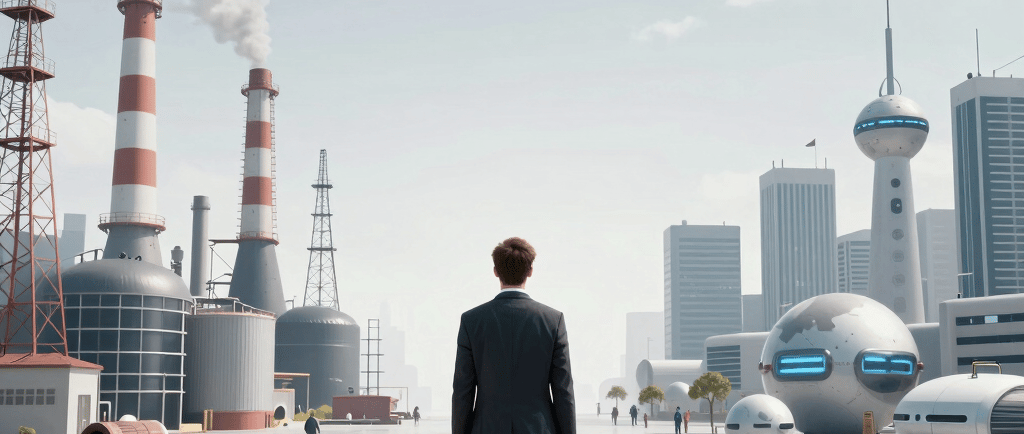
Every generation thinks it is standing at the edge of the biggest change in history.
Maybe every generation is right.
At one point, machines threatened physical labor. Then computers arrived and threatened office work. Then the internet changed shopping, news, entertainment, communication, banking, dating, learning, and almost everything in between.
Now AI is here, and the fear has returned with a new face. This time, the question feels bigger.
What will be left for people?
I understand the fear. When a machine can write, design, translate, summarize, calculate, analyze, answer questions, generate images, compose music, and respond faster than most humans, it is natural to feel uneasy.
But before we declare the end of human work, maybe we should look back at how badly we have predicted work before.
Because if history teaches us anything, it is this. Humans are not very good at imagining the next version of normal.
We usually look at the future through the industries we already understand. We assume the jobs around us are permanent. We assume the big industries of today will remain big forever. We assume the small things will stay small.
Then time quietly embarrasses us.
In the 80s and 90s. Video rental stores felt normal. Weekend movie nights meant walking through shelves, reading the back of boxes, arguing with family members, and hoping the film you wanted was not already rented.
For a while, that industry felt solid. Then streaming arrived, and the whole ritual slowly disappeared.
Film photography once shaped how people captured memory. You took a photo, waited to develop it, and accepted whatever came out. There was patience built into the process. There was mystery.
Then digital cameras came. Then phone cameras came. Then everyone became a photographer without needing a camera.
Music stores were once a whole world. People bought cassettes, CDs, posters, and albums they could hold. Then downloads came. Then streaming came. Now music lives in invisible libraries we rent by the month.
Print newspapers were once the morning rhythm of many homes. Classified ads helped people find jobs, cars, homes, and used furniture. Then websites took the ads. Social media took the attention. Search engines took the habit.
Travel agencies once carried knowledge ordinary people did not have easy access to. Flights, hotels, routes, packages, visas, brochures, deals. Then online booking platforms placed much of that power into the hands of the traveller.
None of these industries vanished completely. Some still exist in smaller, nostalgic, specialist, or luxury forms. But they are no longer the center of daily life the way they once were.
At the same time, other industries were growing quietly in the background.
Nobody in the 80s looked at a warehouse and thought, one day this will become one of the nervous systems of modern life. But online shopping changed everything. A simple human desire created a huge world around it.
Convenience.
Now there are fulfilment centers, route planners, inventory systems, delivery apps, packaging teams, return processing, last mile delivery, warehouse robotics, tracking systems, and people working behind the scenes so someone can receive a phone charger by tomorrow afternoon.
It is easy to say online shopping created e commerce. But it also created an invisible army.
That is how the future works. It does not only invent products. It invents expectations. And expectations create work.
Nobody grew up in the 90s saying, one day I want to become a reels strategist. Nobody dreamed of becoming a thumbnail designer, podcast editor, influencer manager, content calendar planner, online community moderator, brand voice consultant, livestream producer, or personal branding coach. These jobs sound normal now because the world changed around them.
At first, social media was a place to share photos and random thoughts. Then it became entertainment. Then business. Then identity. Then influence. Then income. A new economy formed around attention. The same thing happened with apps. Before smartphones, nobody could have fully predicted how many industries would be built around a small screen in our pocket.
Taxi services became ride hailing platforms. Restaurants became delivery networks. Banks became apps. Fitness became wearable data. Education became online classes. Dating became swiping. Shopping became scrolling. Maps became something we stopped thinking about until the internet failed.
The phone did not only create new jobs. It changed human behaviour. That is the part we keep underestimating. Technology does not only replace tools. It changes habits. And once habits change, work follows.
Cloud computing became huge because businesses no longer wanted to own and manage everything physically. Cybersecurity became huge because our lives moved online. Digital payments became huge because money became less physical. The creator economy became huge because attention became currency.
Many of these industries were either small, strange, or difficult to imagine a few decades ago. Now they feel obvious. That is the trick of history. Once the future arrives, we act as if it was always predictable. But it was not.
Most people did not predict how much we would live through screens. Most people did not predict that teenagers with cameras would become media companies. Most people did not predict that people would make careers from unboxing products, reviewing food, teaching on YouTube, editing podcasts, managing online communities, or helping brands sound human.
We failed to predict many of these things because we were asking the wrong question. We kept asking, what jobs will technology destroy? But we did not ask, what new behaviour will technology create? That is the better question for AI.
AI will absolutely disturb work. It would be childish to pretend otherwise. Some tasks will disappear. Some roles will shrink. Some entry level work may become harder to protect. Some companies will use AI to cut costs. Some people will be forced to adapt faster than they wanted.
But the story does not end there.
AI will also create new expectations. People will expect faster answers, better service, more personalization, cheaper content, smarter tools, cleaner systems, and more convenience. Businesses will expect workers to use AI. Customers will expect companies to know them better. Creators will be expected to produce more. Small teams will be expected to do what large teams once did.
And when expectations rise, new work appears.
Someone will have to guide the tools. Someone will have to check the output. Someone will have to add taste. Someone will have to protect trust. Someone will have to train people. Someone will have to decide what should not be automated.
Someone will have to make the machine useful without making the human disappear.
This is where I think we misunderstand AI. AI may reduce the value of certain tasks, but it may increase the value of certain human qualities.
Judgment. Taste. Trust. Empathy. Leadership. Context. Ethics. Storytelling. Emotional intelligence. The ability to ask better questions. The ability to know when something is technically correct but still wrong for the moment.
This does not mean everyone will be safe. It does not mean the transition will be fair. It does not mean people can relax and hope everything will work out. History did not reward people for standing still during change. But history also did not show us a simple pattern of technology arriving and humans becoming useless. The pattern is more complicated.
Old jobs shrink. New jobs appear. Some people suffer. Some people adapt. Some industries fade. Some industries explode. Some skills lose value. Other skills become unexpectedly important.
Work does not disappear. It changes costume. And human beings, for all our fears, are very good at creating new needs.
We create convenience, then become dependent on it. We create platforms, then need people to manage them. We create speed, then need people to handle the pressure. We create choice, then need people to help us choose. We create technology, then need people to explain it, humanize it, regulate it, sell it, fix it, question it, and protect us from it.
That is why I do not fully believe the idea that AI will take over humanity. It may take over many tasks. It may take over parts of many jobs. But humanity will continue creating new problems, new desires, new habits, and new forms of laziness that require new forms of work.
That sounds funny, but it is true. The more advanced we become, the more help we seem to need.
We have food delivery because we are busy. We have cleaners because we are tired. We have online tutors because education became competitive. We have personal trainers because fitness became complicated. We have digital marketers because attention became difficult. We have therapists and coaches because modern life became mentally heavy. We have cybersecurity because the online world became dangerous. We have logistics because convenience became normal.
So what will AI create?
Maybe AI workflow designers. AI ethics guides. Human tone editors. Trust consultants. Synthetic content auditors. Personal AI trainers. Small business automation advisors. Digital identity protectors. Memory curators. Human experience designers.
Some of these may sound ridiculous now. That is usually how future jobs begin. They sound unnecessary until the world changes enough to need them. So maybe the question is not, will AI take my job? Maybe the better question is, which part of my work is only a task, and which part of my work is truly human?
Because if my value is only in repeating something, I should be worried.
But if my value is in understanding people, solving messy problems, building trust, making decisions, noticing what others miss, and giving meaning to tools, then maybe AI is not only a threat.
Maybe AI is not only a threat. Maybe it is also a mirror.
It may show us how much of modern work had already become mechanical before the machines arrived. How many people spend their days replying, copying, forwarding, reporting, attending, updating, ticking boxes, and sounding professional without feeling connected to anything they are doing?
How much of work had already trained humans to behave like systems?
That is the uncomfortable part. AI may not only ask, “Can a machine do this?” It may also ask, “Why were humans doing this like machines in the first place?”
Maybe the future will not need everyone to become a coder. Maybe it will need people who can think clearly in a noisy world. People who can learn without panic. People who can communicate without hiding behind jargon. People who can use tools without becoming tools themselves.
Maybe it will need people who can bring judgment where there is too much information, taste where there are too many options, care where there is too much speed, and trust where there is too much automation.
That may be the real shift. Not humans versus machines, but humans remembering what makes them human.
The old world rarely returns. Video stores did not return. Film rolls did not return to the center of everyday life. CD shops did not become the main way people found music again. Travel agencies did not regain the same control they once had.
But stories survived. Photos survived. Music survived. Travel survived.
The form changed, but the human desire remained.
That is the part worth remembering. Technology changes the container. Human longing fills it again.
So yes, AI will change work. It may change it deeply. It may make some people uncomfortable, angry, afraid, or uncertain.
But if history has taught us anything, it is that we should be careful before declaring the end of human usefulness. Humans are not useful only because we produce. We are useful because we notice, interpret, care, doubt, imagine, and make meaning out of things that would otherwise remain output.
Somewhere, a new industry is forming around a habit we barely notice today. Somewhere, a small inconvenience is becoming tomorrow’s business model. Somewhere, a new human dependency is being born.
And somewhere, a job that sounds ridiculous right now will become completely normal to the next generation.
That is how the future works. It arrives strangely. Then it becomes obvious. Then we forget we never saw it coming.