
Beyond the Cabin Smile
The hardest part of the job is not turbulence, delays, or jet lag. It is remembering where the performance ends and where you begin.
5/9/20263 min read
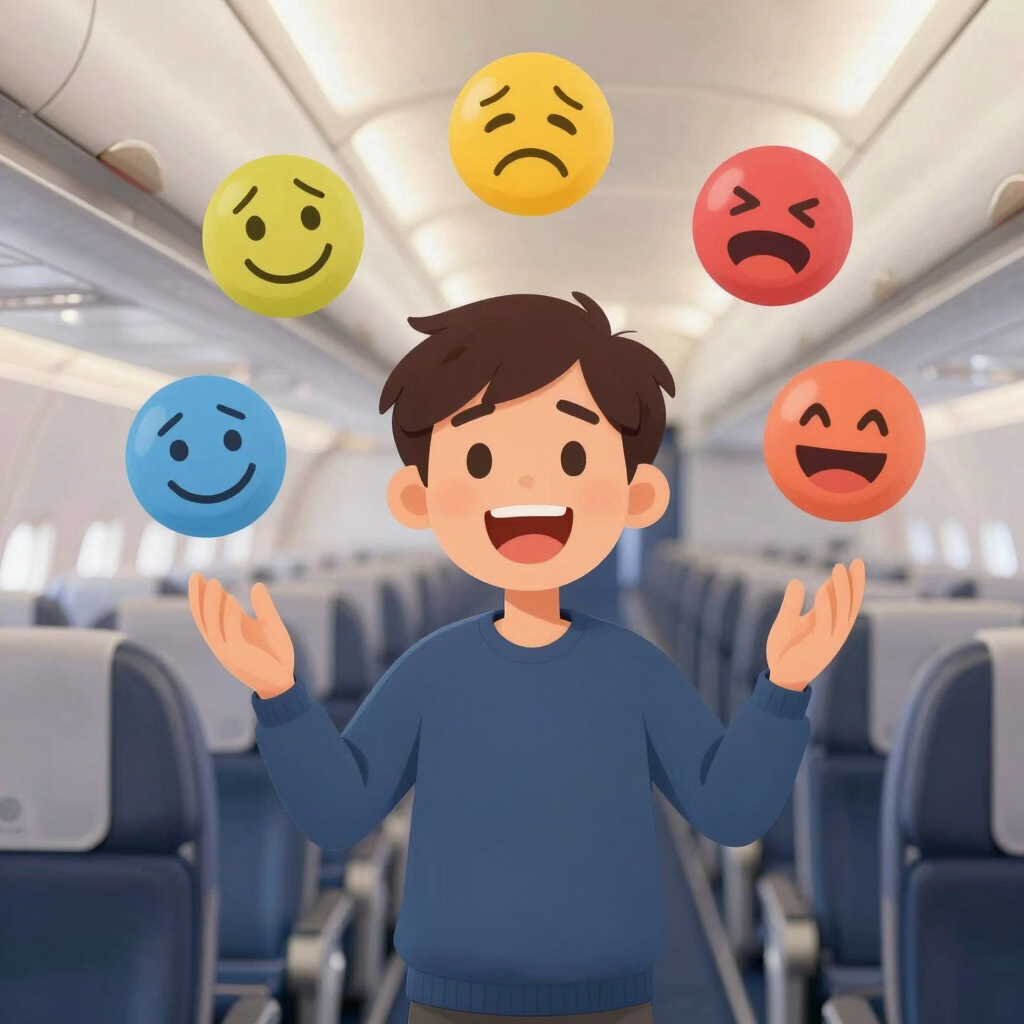
Beyond the Cabin Smile
Before the seat belt sign recycles at 10,000 feet, you’ve already navigated a lifetime of human emotion.
1A just welcomed a new baby into the world
3D is flying home with her mother… in the cargo hold.
4A looks exactly like your childhood crush, triggering a split second of nostalgia.
1E is an A list celebrity trying not to be noticed.
A few rows later, 4K is already demanding a drink before the wheels are even up.
You walk up to each of them wearing the right face.
Soft. Steady. Familiar. Efficient.
A normal person doesn’t swing from congratulations to condolences to frustration and then back to service flow within a single aisle walk, we cycle through grief, excitement, irritation, empathy, nostalgia and duty. We don’t just follow a service flow, behind the service flow there is a constant negotiation with human emotion.
So eventually, the brain adapts. It learns to compartmentalize. Grief goes into one drawer. Joy into another. Fatigue, surprise, frustration, and professionalism all neatly packed away so the service can continue.
The "mask" we wear to handle it all— switching from a grieving whisper to a celebratory cheer in the span of three rows-comes with a scientific price tag known as Emotional Labor.
The Science of the Mask
Research into the aviation industry often distinguishes between two types of emotional regulation: Surface Acting and Deep Acting. Surface Acting is the "faking" of an emotion. Deep Acting is when you try to feel the empathy required for the job.
While Deep Acting can feel more rewarding, the constant toggling between these states causes Emotional Dissonance. Studies, including research published in the Journal of Occupational Health Psychology, suggest that this dissonance leads to elevated cortisol levels —the body's primary stress hormone. When we "surface act" for 12 hours straight, our brain stays in a state of high alert, unable to distinguish between the mask and our true selves.
Emotional Recalibration
A normal person is not required to emotionally recalibrate dozens of times within a few hours. Cabin crew do it repeatedly throughout a single flight, shifting from empathy to authority, from celebration to grief, often before the seatbelt signs even switch off.. We aren't just feeling our own emotions; we are absorbing and "mirroring" the emotions of 300 strangers. This constant adaptation is what scientists call Emotional Contagion, and it is physically exhausting.
The Toll on Personal Life
These emotions follows us into hotel rooms, quiet apartments, missed phone calls, and dinners where we nod more than we speak. After spending an entire flight regulating the emotions of hundreds of strangers, many crew members land emotionally numb rather than physically tired.
We have smiled through frustration, softened tension, absorbed grief, mirrored joy, managed conflict, and remained emotionally available for hours at a time. By the end of the flight, there is often very little left of us to bring home.
Over time, this constant emotional regulation can create something psychologists call depersonalization. Human interactions slowly begin to feel procedural rather than personal. Conversations become tasks. Presence becomes performance. Even intimacy can start to feel emotionally demanding rather than natural.
That is the hidden danger of prolonged emotional labor. The mask becomes so well practiced that you begin to forget where the role ends and where you begin.
Which is why authentic detachment matters. The ability to understand that the passenger in 4K is reacting from their own stress, fear, exhaustion, or pain, not from your worth as a human being.
Sidebar: 3 Quick Tips for the Layover
The "Uniform ritual": When you reach the hotel, take 15 minutes of absolute silence before checking your phone. Let the "crew" persona dissolve before you call home.
Name the Emotion: Science shows that simply labeling a feeling (e.g., "i am feeling frustrated by 4K") moves the activity from the emotional center of your brain to the rational center, lowering stress.
Low-Stakes Socializing: If you're drained, skip the loud crew dinner. opt for a walk in a park. Nature exposure is clinically proven to lower cortisol faster than "forced" social interaction
The hardest part of the job is not turbulence, delays, or jet lag. It is remembering where the performance ends and where you begin.
Supporting References for Further Reading:
Hochschild, A. R. (1983). The Managed Heart: Commercialization of Human Feeling. (The founding text on Emotional Labor in flight attendants).
Grandey, A. A. (2000). Emotional regulation in the workplace: A new way to conceptualize emotional labor. Journal of Occupational Health Psychology.
The Harvard Flight Attendant Health Study (2018). (Provides context on the physical impacts of occupational stress in crew).