
The Other Version of Me
Are you judging the person or the chapter you met them in? We rarely know the whole story. Most of the time, we only meet people in one scene and call it the truth.
7/3/20263 min read

"If you ask the grass, the zebra is the monster, and the lion is the protector."
The first time I read that, I smiled, it felt too true to ignore. We spend so much of life believing we are seeing the whole picture, when most of the time we are only seeing our side of it.
From the grass’s point of view, the zebra destroys life. Every mouthful is another loss. Then the lion arrives, the zebra runs, and the eating stops. To the grass, the lion is not a predator. It is a protector. Of course, if you ask the zebra, you will hear a completely different story.
Neither is trying to deceive you. They are simply describing the same world from different places, and each version makes perfect sense from where they are standing in that moment.
The more I thought about it, the less I believed it was only about perspective. I think it is also about timelines.
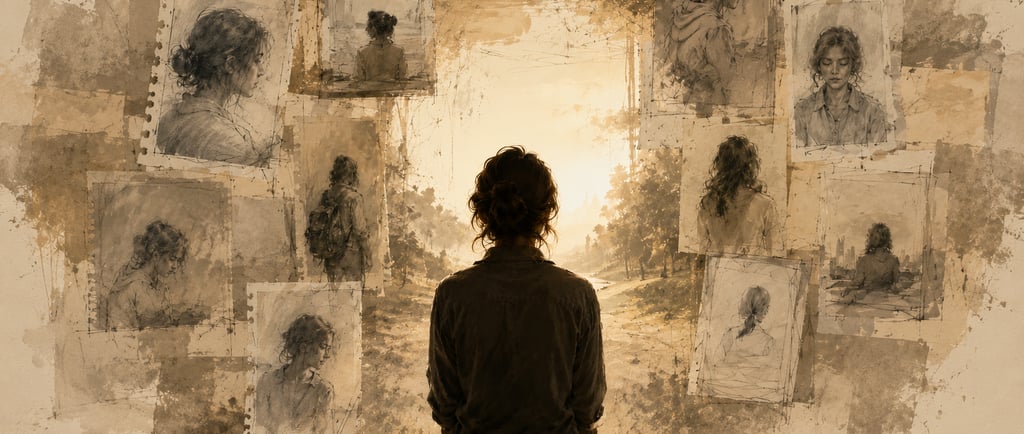
Every person we meet arrives carrying pages of stories we have never read. We do not know what season of life they are in, what chapter they have just survived, or what scene they are trying to move past. Most of the time, we only witness a small part of them and still assume we understand the whole book.
A single moment becomes our conclusion.
When we think about our own mistakes, we naturally include context. We remember how tired we were, what happened that morning, what we were worried about, and what we were trying to achieve.
We do not just see the page. We remember the scenes behind it. The tiredness, the fear, the pressure, the private worries, and all the small things nobody else saw before that moment happened.
We rarely offer others the same context we give ourselves.
When we think about someone else, we often forget that they have a timeline too. Instead, we reduce them to a moment.
Perhaps memory is not a recording. Maybe it is closer to a witness statement. It remembers what hurt. It protects that mattered. It forgets details that did not feel important at the time.
That is why two people can walk away from the same moment with completely different versions of what happened.
One person remembers the words. The other remembers the silence before them. One remembers being hurt. The other remembers being unheard. And somewhere between those two versions, life happened.
The difficult part is that we rarely see all the details when something happens. We see the tone, the timing, the words, or the behaviour, but we do not see the fear behind it, the pressure before it, or the history that shaped it.
And once our mind forms a conclusion, it often stops searching for what is missing and starts looking for what confirms what we already believe.
That is how someone becomes “difficult” in our mind. After that, even their ordinary actions begin to look difficult. Their silence feels rude. Their confidence feels arrogant. Their mistake feels typical.
We are no longer observing them clearly. We are collecting evidence for a story we have already decided to believe.
That is exhausting, because we keep asking people to live inside a version of themselves they may have already outgrown.
Perhaps that is why some people remain “the selfish one,” “the arrogant one,” or “the difficult one” in our minds, even years later. We become so attached to the image we created in that moment that changing our opinion feels almost like admitting we were wrong.
But sometimes our judgment was not completely false. It was simply incomplete.
That thought has changed the way I think about people. It has also changed the way I think about myself.
We spend so much time worrying about what people think of us. We replay conversations, explain our intentions, and carry the weight of opinions we cannot control. We want everyone to understand why we did what we did.
But people cannot experience our intentions. They only experience the part of our story that touched theirs. Just as we only experience the part of theirs that touched ours.
Perhaps that is why judging feels so natural. It asks very little of us.
Curiosity asks much more. Curiosity requires us to imagine years we never witnessed, struggles we never shared, and battles that made perfect sense from where another person was standing.
That does not mean we excuse every action. Some behaviour is genuinely harmful, and people should be held accountable for it.
Understanding someone is not the same as agreeing with them. It simply means refusing to believe that one moment, one mistake, or one version of a person tells the entire story.
None of us wants to be remembered by our worst chapter.
We hope people notice that we learned, that we apologised, that we grew, and that we became softer where we were once sharp. Yet we rarely offer that same generosity to others.
Peace does not begin when everyone finally understands us. Perhaps it begins when we stop expecting people to remain exactly as we remember them.
Because people change.
So perhaps the next time we feel certain about who someone is, it is worth asking ourselves one question.
How many people are still living inside your judgment, long after they have outgrown the chapter that created it?