
Where did the color go?
A quiet question about color, childhood, adulthood, and the wonder we slowly forget.
6/2/20264 min read
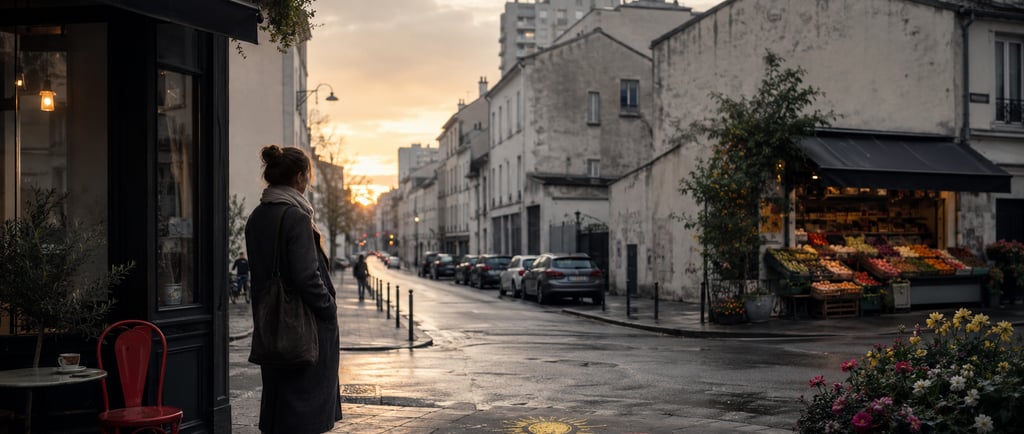
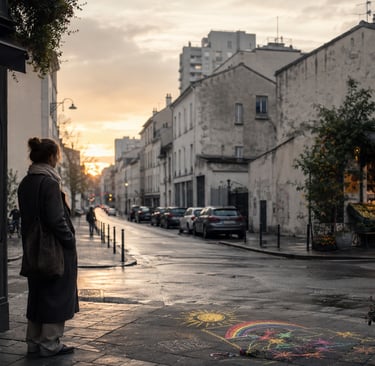
Sometimes I wonder if the world has become less colorful. Not metaphorically at first. Literally.
Look at the roads. White cars. Black cars. Grey cars. Silver cars.
Look at the buildings. Glass. Concrete. Beige walls. Neutral interiors. Clean lines. Safe designs.
Look at cafés. The same wooden tables. The same soft lighting. The same plants placed carefully in corners. The same menu boards pretending to be different.
Somewhere along the way, the world seems to have agreed on a color palette and quietly removed everything that felt too loud, too weird, too local, too alive.
I don’t know when it happened. Maybe it happened slowly. Maybe color did not disappear in one dramatic moment. Maybe it faded the way old fabric fades in the sun. One shade at a time. One building at a time. One trend at a time.
The strange thing is, I remember the world being brighter.
I remember buses with wild paint. Shops with strange signs. Houses that did not match. Clothes that made no attempt to be aesthetic. Rooms filled with random colors because nobody was thinking about minimalism.
Everything had personality because nothing was trying too hard to be tasteful.
Now the world often feels edited. Cleaned up. Muted. Designed for photographs before it is designed for memory.
But then I have to ask myself a harder question.
Did the world lose its color? Or did I?
Because when we are children, color is not only something we see. It is something we feel.
A red balloon is not just red. It is excitement. A yellow school bus is not just yellow. It is morning, noise, fear, friendship, and the beginning of a day. A blue sky is not just blue. It is freedom before we even know the word freedom.
As children, we do not separate color from emotion. Everything arrives together. The world enters us whole.
Psychologists have long connected color with mood, but I don’t think we need a research paper to understand it. We have felt it all our lives. Red can wake something up in us. Yellow can feel playful. Green can calm the body before the mind even explains why. Blue can open space inside us, or sometimes make us feel quietly sad. Colors do not control us, but they do speak to us. They change the temperature of a room. They change the feeling of a street. They change the way a memory sits inside the body.
Maybe that is why a colorless world feels heavier than we admit. When everything around us becomes grey, beige, black, white, and carefully controlled, maybe our inner world also loses small chances to be surprised. Maybe color was never only decoration. Maybe it was emotional oxygen. A small reminder that life was allowed to be playful, loud, strange, soft, warm, messy, and alive.
Then we grow up.
We learn names. We learn prices. We learn schedules. We learn bills. We learn disappointment. We learn how things work, and sometimes that knowledge quietly removes the magic from them.
The same street that once felt full of mystery becomes the road to work. The same rain that once made us run outside becomes traffic, wet shoes, and delayed plans. The same bright shop sign that once pulled our eyes becomes visual noise.
Maybe adulthood does not remove color from the world. Maybe it teaches us to stop being surprised by it.
And that makes me wonder about children born today.
Do they see this world as grey? Or is this still colorful to them?
Do they look at the same beige café and see warmth? Do they look at a black car and see elegance? Do they see a phone screen not as a symbol of distraction, but as a universe of moving color?
Maybe a child born into this modern world is not mourning the colors we lost because they never knew them. Maybe they are busy discovering their own.
Maybe one day they will grow up and say, “The world used to be so colorful when I was young,” while looking back at the very world we are calling dull now.
That thought humbles me.
Because maybe every generation believes the world was brighter before. Maybe what we really miss is not only color. Maybe we miss the version of ourselves that still knew how to be amazed.
But maybe someone younger would disagree with me completely. Maybe they would say the world has never been more colorful. Screens glow with impossible shades. Fashion has no borders. Music travels across continents in seconds. A child today can see more worlds in one afternoon than we saw in entire years.
Maybe color did not disappear. Maybe it became too available. Maybe it became background noise.
Still, I do think something has changed.
The world has become safer in its choices. Brands choose neutral colors because they offend nobody. Buildings choose glass and grey because it looks modern. People choose muted tones because they feel clean, expensive, and controlled.
We have slowly replaced color with taste.
But taste is not always life.
Sometimes life is a purple wall that makes no sense. A green bus with peeling paint. A red plastic chair outside a tea shop. A yellow signboard written by hand. A house painted by someone who did not care what Pinterest thought.
Maybe color lives in confidence.
Maybe the world became less colorful because we became more afraid of standing out. And maybe we became less colorful because adulthood taught us to survive first and notice later.
So I don’t know the full answer.
Maybe the world has lost some color. Maybe we have lost some wonder. Maybe both happened quietly, while we were busy becoming responsible.
But I still believe color is not gone.
It is hiding in smaller places now. In children’s drawings. In fruit stalls. In old houses. In temple walls. In football jerseys drying on balconies. In a sunset nobody posted. In a random laugh that changes the mood of a whole room.
It is hiding in the moments that still catch us before we have time to explain them.
Maybe this is part of why so many people feel mentally tired now. Not because the world has literally become grey, and not because color alone can save anyone, but because we live in environments that often feel controlled, repetitive, and emotionally flat. We are surrounded by light, but not always by warmth. We are surrounded by images, but not always by wonder. We see more than ever, yet somehow feel less touched by what we see.
Maybe the world is not completely colorless. Maybe we are tired. Maybe we are overstimulated. Maybe we are too familiar with everything.
Maybe the child inside us still sees color, but we have trained him to be quiet.
And maybe, once in a while, the work is simple.
Stop. Look again.
Ask yourself not only, “Where did the color go?”
But also,
“When did I stop noticing it?”